
Calgary’s Music Mile is one of the city’s most celebrated cultural corridors, having transformed the historic neighbourhoods of Inglewood and the East Village into a thriving hub for live music. Its story is deeply intertwined with Calgary’s most iconic landmarks—from the legendary King Eddy hotel to the state-of-the-art National Music Centre. In this article for icalgary.net, we explore how Music Mile Calgary came to be, why 9th Avenue became its musical spine, the role of bygone jazz clubs, how the city managed to preserve its musical heritage, and why the Music Mile became a cornerstone of Calgary’s cultural and urban revival.
From “Brewery Flats” to a Music Hub: How Inglewood Fought Off Demolition
Inglewood is Calgary’s oldest neighbourhood, located just east of the confluence of the Bow and Elbow rivers. It was here in 1875 that the North-West Mounted Police built the fort that laid the foundations for modern Calgary. Originally, the area was known as East Calgary or “Brewery Flats” due to the distinct malty aroma drifting from the Calgary Brewing and Malting Company, established in 1892.
Throughout its history, the community weathered numerous highs and lows. In the 1960s, city planners intended to bulldoze more than 300 homes across the community to build a freeway dubbed the Downtown Penetrator. However, local residents, led by architect Jack Long, rallied and successfully defended their neighbourhood.
In time, historic 9th Avenue (known as Atlantic Avenue until 1904) evolved into the central artery of the Music Mile. The idea for a dedicated music district came after community activist Bob Chartier made a pilgrimage through iconic American music hubs like Austin, New Orleans, and Nashville. He returned home determined to build a similar ecosystem in Calgary. Alongside Elizabeth van Berkel, he officially co-founded the Music Mile Society in January 2016.
The Jazz and Blues Era: The Loss of Beat Niq and the Rise of a New Independent Scene
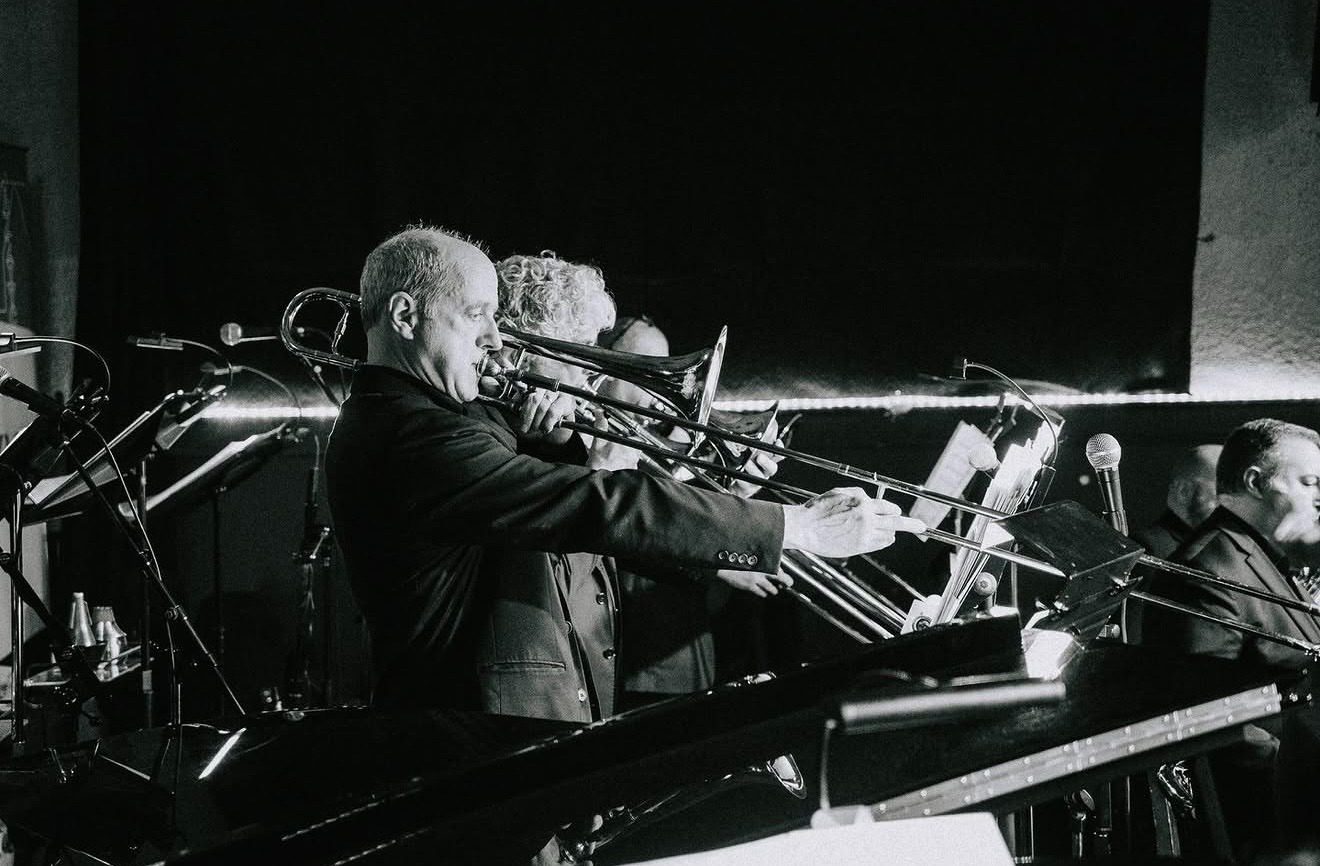
While Calgary is often synonymous with country music thanks to the world-renowned Stampede festival, jazz and blues have deep roots here as well. A vibrant jazz scene flourished across the city throughout the 1950s and 1970s, with Mount Royal College even launching a dedicated jazz diploma program in the 1970s.
Still, musicians face ongoing hurdles: the city continues to lack a dedicated Blue Note-style venue where audiences gather exclusively for pure jazz. For years, that cornerstone was the Beat Niq Jazz & Social Club, tucked into the basement beneath the Piq Niq café on 1st Street SW from 1997 to 2012. It served as a home for local artists, touring acts, and Mount Royal students alike. Its closure left an institutional void that musicians have taken upon themselves to fill, curating intimate sets at venues like Betty Lou’s Library or The Deane House.

The Heart of East Village: Studio Bell’s Acoustic Feat and Saving Canada’s Oldest Blues Bar
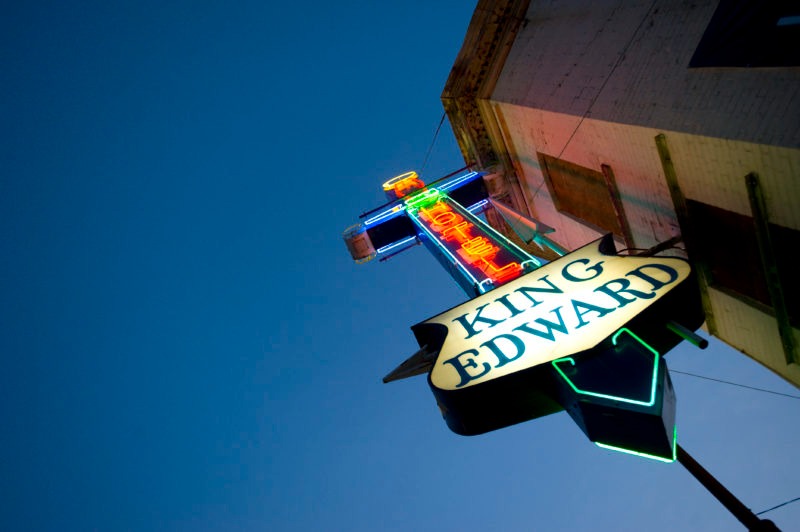
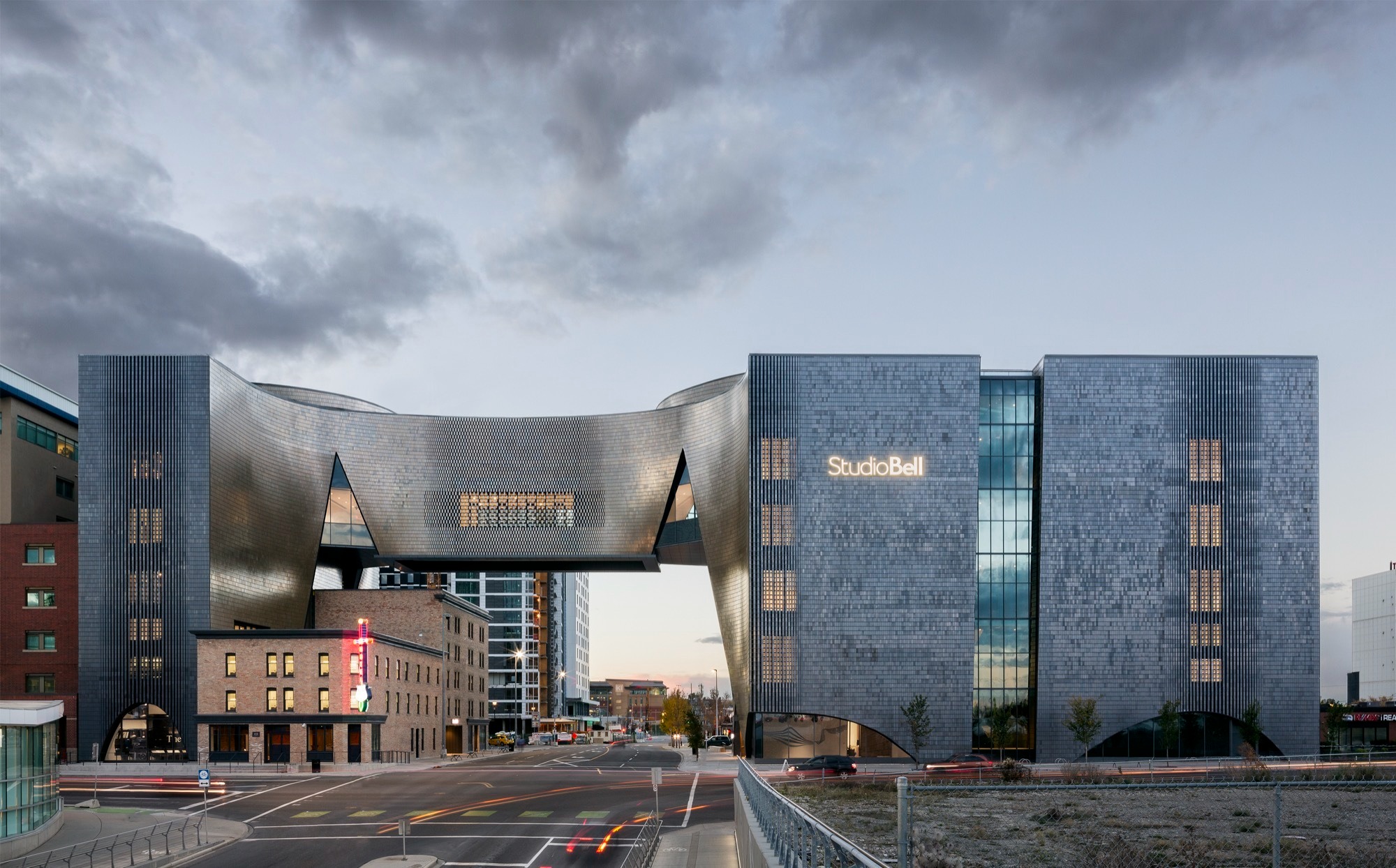
If Inglewood is the soul of the Music Mile, East Village is its architectural and infrastructural engine. The ultimate symbols of renewal here are the historic King Edward Hotel (affectionately known as the King Eddy) and the National Music Centre (Studio Bell) built around it.
Reviving a Legend: The King Eddy
The King Edward Hotel opened its doors in 1905 along 9th Avenue SE—a strip then nicknamed “Whiskey Row.” During Alberta’s prohibition era (1916–1924), the hotel gained notoriety as a bootlegging hotspot. Later, under the stewardship of Homer Meeks, it broke barriers by becoming Calgary’s first desegregated bar. By the 1980s, it had earned its title as the “Home of the Blues,” hosting blues titans such as B.B. King, John Hammond, and Buddy Guy.
In 2004, the legendary venue was condemned and shut down due to black mould and structural decay, facing imminent demolition. In 2008, the National Music Centre stepped in to save it. The entire structure was painstakingly dismantled brick by brick: every single piece was cleaned, catalogued, and stored on pallets before being reassembled to match its original 1905 blueprint. The venue officially reopened in 2018 as a restaurant, bar, and live music performance space. Today, it stands proudly as Canada’s oldest blues bar. In 2025–2026, the King Eddy marks its 120th anniversary with events like the Eddy Fest festival, celebrating over a century of cultural heritage.
Studio Bell: A Masterclass in Acoustic Engineering
Rising alongside the King Eddy is Studio Bell—a striking architectural statement clad in concrete, steel, and glass. This dynamic design is much more than an aesthetic triumph; the entire facility was engineered as a massive acoustic instrument. Heavy concrete mass provides the acoustic separation and structural stability needed to control resonance and vibration. This allows exhibitions, live concerts, and professional studio recordings to happen simultaneously without sound leakage. The facility houses five floors of exhibition space, a 300-seat performance hall, a broadcast radio station, and premier recording studios.
Where to Hear Live Music on the Music Mile: The Ironwood, The Blues Can, and the Scene’s Future
Calgary’s Music Mile is far more than just a string of stages along a street. The district along 9th Avenue SE has become an eclectic ecosystem where heritage buildings, grassroots clubs, and contemporary artists unite. Visitors can experience everything from folk, blues, and jazz to country and rock, keeping live performance culture thriving in spaces that once served entirely different purposes.
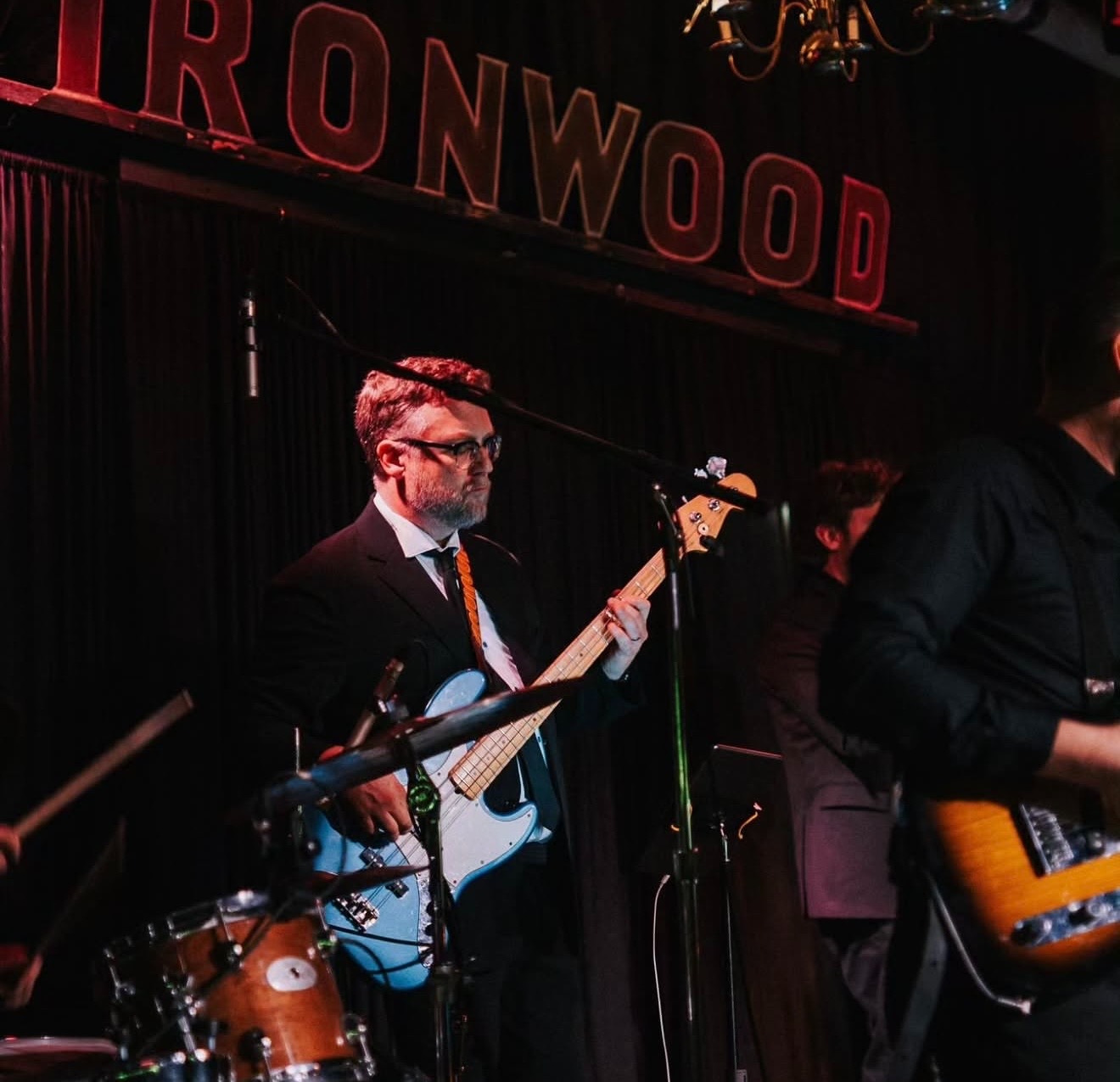
A cornerstone of the strip remains The Ironwood Stage & Grill, located at 1229 9th Ave SE in Inglewood. Housed in the historic Garry Theatre building from 1936, the venue refuses to box itself into a single genre, hosting folk, jazz, country, and classic rock. This versatile curation has made The Ironwood one of the premier performance destinations in the area.
Just a few blocks away sits The Blues Can, an intimate roadhouse-style venue at 1429 9th Ave SE. Since opening in 2010, it has championed live blues seven nights a week. Its compact, rustic setting fosters an up-close-and-personal connection between performers and patrons. It feels like a genuine, old-school music joint where you drop in not for polished spectacle, but for raw, authentic sound any night of the week.
Yet the growth of the Music Mile is about more than just its famous stages. A crucial part of its story has been the fight for youth access. Early on, many local venues operated under strict 18+ licensing restrictions, effectively locking out teenage songwriters and musicians regardless of their talent.
A breakthrough came when 15-year-old Kate Stevens spoke up at an early community meeting, boldly raising the issue of underage performers being barred from stage opportunities. Her advocacy sparked the creation of the Youth Musicians of Music Mile Alliance, widely known as YO MOMMA.

The arrival of this youth movement transformed the ethos of the Music Mile. The district opened its doors to emerging talent alongside veteran headliners, giving young artists the platform to perform, collaborate with seasoned pros, and build their early fanbases.
Heritage-Focused Urbanism: The “KISS” Principle and Inglewood’s Stand Against Hyper-Gentrification
The evolution of the Music Mile is closely tied to the 15-year master-planned revitalization of the East Village. In 2007, the Calgary Municipal Land Corporation (CMLC) took on the task of transforming the once-neglected, crime-troubled district. Financed through a Community Revitalization Levy (CRL), tax revenues generated from new commercial developments were reinvested directly into core public infrastructure: flood mitigation, pedestrian bridges, and enhanced streetscapes. Today, the East Village is home to roughly 4,000 residents.

Up the street in Inglewood, the urban planning philosophy takes a distinctly community-first approach. Locals champion the playful yet purposeful KISS mantra—Keep Inglewood Slightly Sleazy. The goal is to safeguard the neighbourhood’s eclectic tapestry of heritage storefronts, vintage boutiques, and industrial roots from runaway gentrification and glossy, cookie-cutter high-rises.
Inglewood is home to the highest concentration of heritage assets in Calgary, with 75% of them lining its main street. The Inglewood Business Improvement Area (BIA) vigorously advocates for pedestrian-scale development, actively resisting tower proposals of 45 to 56 metres that threaten to overshadow Calgary’s oldest historic high street.
A healthy music ecosystem is a serious economic engine. Research demonstrates that vibrant music scenes correlate strongly with thriving tech clusters, helping attract and retain skilled knowledge workers. Music tourism presents equally compelling opportunities. Furthermore, a comprehensive music strategy equips Calgary to compete with cultural magnets like Toronto, Vancouver, and Montreal, stemming the brain drain of creative talent. Public and private investments in anchors like Studio Bell or open-air riverfront stages make the city an appealing place to live year-round—even during chilly winter events like the Chinook Blast festival.

Calgary’s Music Mile stands as a prime example of how grassroots culture, heritage preservation, and forward-thinking urban planning can redefine an entire district. From the storied King Eddy and historic 9th Avenue to Studio Bell and beloved independent music venues, the Music Mile seamlessly bridges past and future. Today, it is not merely a live music hub, but a vital cultural and tourist destination that protects Calgary’s character while unlocking fresh opportunities for musicians and residents alike.