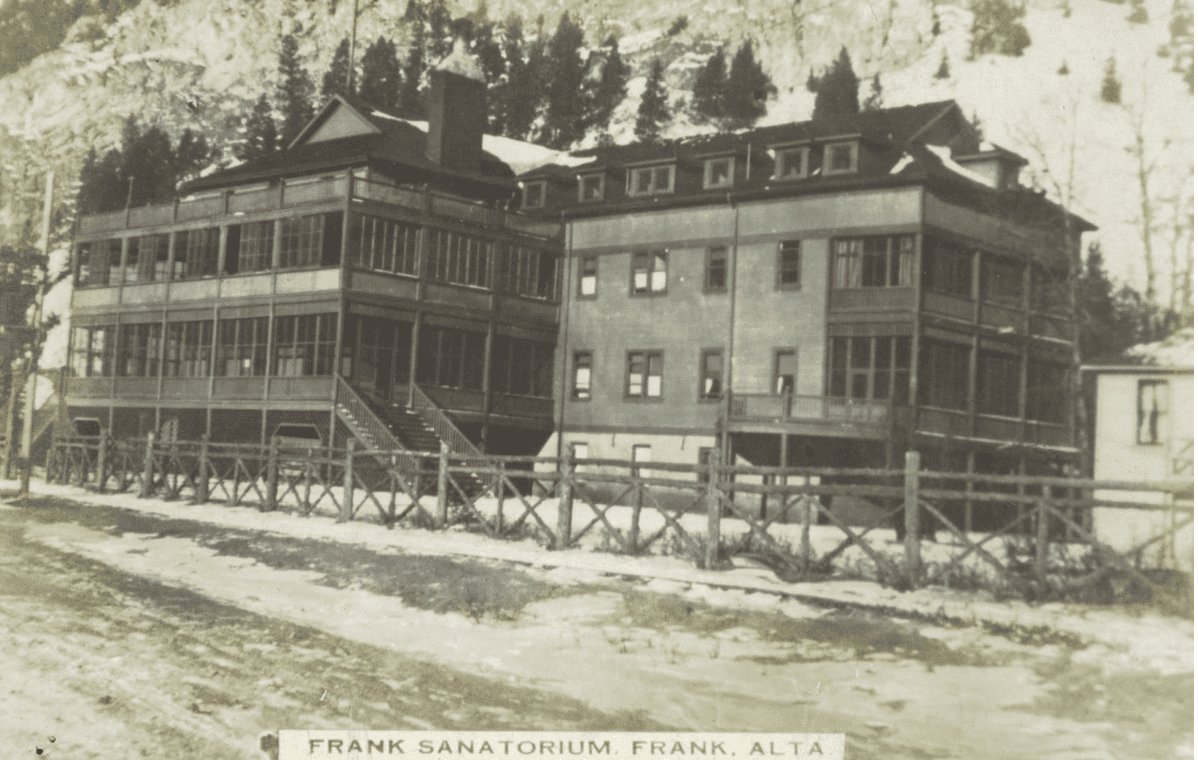

The Rocky Mountain Sanatorium, nestled amidst picturesque mountain landscapes, was once famous as a treatment centre for tuberculosis patients. In the 20th century, the sanatorium became a symbol of hope, the fight for life, and the advancement of medical knowledge, but today it is rarely mentioned. In this article on icalgary, we will explore the history of this legendary place.
History of the Sanatorium
The sanatorium was built on the site of a sulphur spring at the base of a mountain. The spring was discovered back in the 1880s by William Samuel Lee and his son Henry. It was Mr. Lee who built a hotel here and managed it until he sold the rights to the spring to a Mr. Gibeau. Hotels back then served a different function than they do today. They were essentially housing for workers who came to the area for employment and had no other place to live.
In 1905, the rights to the spring were acquired by the Canadian-American Coal and Coke Company, which built a wood-frame hotel nearby. Initially, the hotel was called “Sulphur Springs,” but it later changed its name to the “Rocky Mountain Sanatorium.”
Cold water from the spring was piped into the sanatorium, heated, and used to treat ailments, particularly arthritis. In 1917, the government purchased the sanatorium to treat soldiers returning from the First World War. Many of these soldiers suffered from tuberculosis, and it was believed that the sulphur water from the spring was an effective treatment for this terrible disease. Soldiers who had been injured by gas attacks also became patients at this facility.
What the Sanatorium Was Like
The sanatorium was located at the foot of the mountains, where the fresh, pleasant air was considered therapeutic for patients with lung diseases. The sanatorium complex consisted of several buildings. The single or double rooms were very spacious and had balconies for relaxation. There were also common areas for resting outdoors.
The Rocky Mountain Sanatorium was not a hospital in the traditional sense, but rather a place for rest with some medical treatments. The most important part of a stay here was relaxation and recovery.
A New Sanatorium
In 1920, the Central Alberta Sanatorium was built, which marked the beginning of the end for the Rocky Mountain Sanatorium. The building was demolished, and a children’s playground was built on part of the old sanatorium’s foundation.
The military hospital was also moved to the new sanatorium, and Henry Baker became the director of the new hospital. The Central Alberta Sanatorium was typical of its era: isolated, lined with trees, and divided into separate buildings.
Baker made a significant contribution to the development of the sanatorium and to medicine in Alberta. Therefore, after he retired in 1950 following 30 years of service, the sanatorium was renamed the Baker Memorial Sanatorium.
By 1962, as more residential facilities for tuberculosis patients were being built in Alberta, the sanatorium was converted into the Baker Centre, a support centre for people with disabilities. One of the sanatorium’s legacies is a large park with 1,800 trees that were planted here early in the last century.
Baker Park
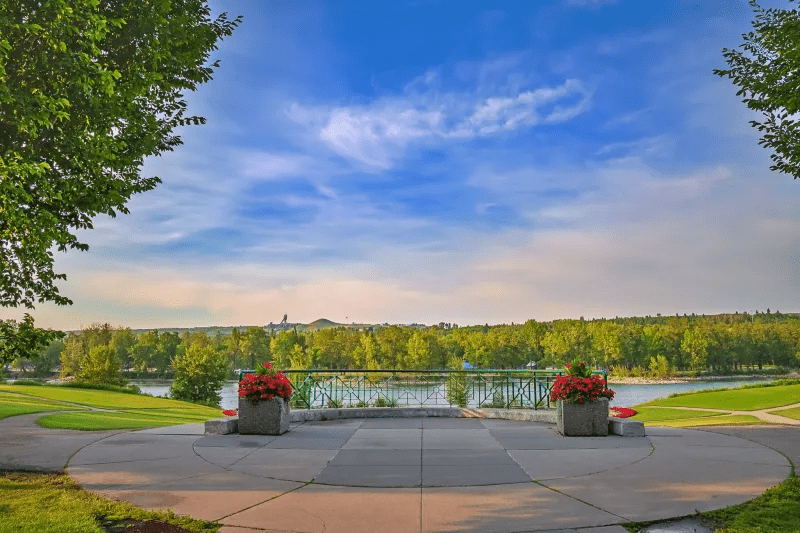
It can be said that today, Baker Park is the only reminder of the area’s sanatorium past. It stands out from other Calgary parks precisely because of its “old-fashioned” feel. The park features geometric pathways and arrow-shaped allées characteristic of sanatoriums from the First World War era.
In the park, you can see unique trees such as white spruce, Manitoba maple, and Douglas fir. The park also features a disc golf course, gazebos, a grass amphitheatre, and a river lookout. Thus, even today, this place remains a wonderful spot to relax and rejuvenate away from the city bustle. Rocky Mountain Sanatorium, history of Alberta, Calgary, historic sites of Canada, Baker Park, tuberculosis treatment, sulphur springs, Canadian medical history, First World War, military hospital, Calgary heritage, Calgary parks, Alberta architecture, historic buildings, Canadian medicine, tourist sites in Alberta