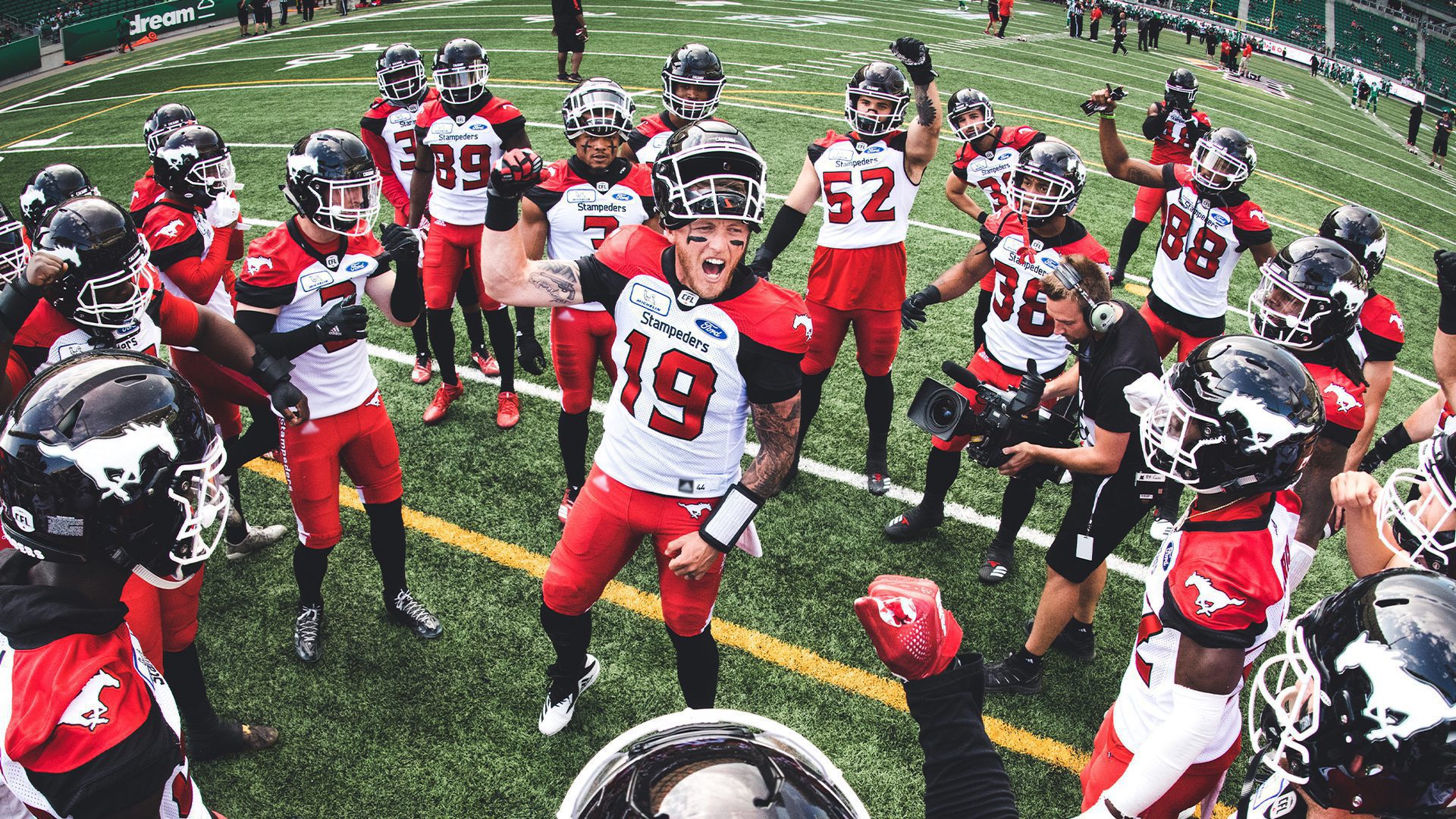

The Calgary Stampeders are a professional Canadian football team that saw their first game in 1945. They were one of the nine founding members of the Canadian Football League (CFL). The team has a lengthy history and is well known for its significant role in Canadian football. Through multiple Grey Cup victories, fan loyalty and a pursuit of excellence, the Stampeders have earned a reputation as one of Calgary’s most success driven and loved sports teams. Read more about the Canadian football legend’s long and difficult path to heights of fame at icalgary.
How did Canadian football actually originate in Calgary?
Rugby first began in Montreal, Canada in the 1860s. Two decades later, this game gained popularity in Calgary, particularly in the North West Mounted Police barracks. Over the years, rugby was actively developed here until it evolved into Canadian football, a contact sport that blends various elements of rugby and American football.
In 1909, the Calgary Tigers became members of the Alberta Rugby Football Union (ARFU) and within two years, they triumphed as champions of the Western Canada Rugby Championship. The beginning of World War I put the development of this sport on hold. However, in 1919 the newly formed Calgary Canucks team joined the ARFU.
In 1921, the only city representative for Canadian football in the ARFU was the Calgary Rugby Club. In 1922, Calgary had no team of its own, but the following year, the Battalion was formed here. The team was named after the local military battalion that provided funding for the rugby players. In 1924, the Battalion won the championship but lost to Winnipeg in the Western Division finals, after which the team declared its disbandment.
Canadian football returned to Calgary in 1928 when the Calgary Tigers team was formed. In 1929, its player Gerry Seiberling made the first recognized pass in the history of Canadian football.
In 1931, the city introduced a new team, the Calgary Altomahs, but they only lasted until 1934. The following year saw the formation of a new team, the Bronx, which joined the Western Interprovincial Football Union (WIFU) in 1936 and won the 1937 and 1938 regular season championships. A stumbling block to the development of Canadian football came with World War II.
Calgary Stampeders, establishment and early years
In September 1945, several investors established the Calgary Stampeders team. Despite the absence of a regular season that year, the Stampeders players, led by coach Dean Griffing, defeated the Regina Roughriders in a two-game series before falling to the Winnipeg Blue Bombers in the WIFU Championship.
The team’s official colors are red, black and white, symbolizing a powerful and distinctive identity. In 1946, the team finished first under Paul Rowe in the WIFU and the following year finished second, losing to the Winnipeg Blue Bombers. Les Lear became the coach in the subsequent season.
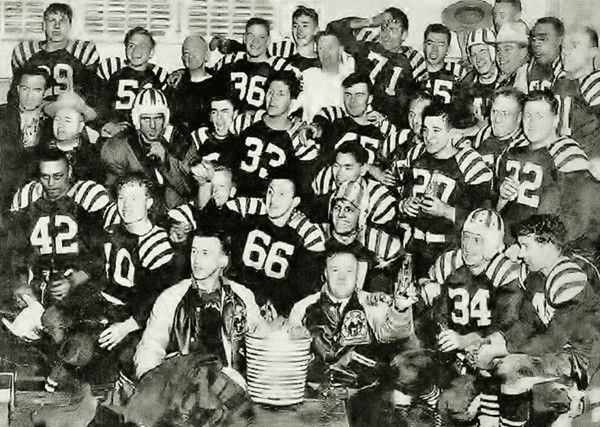
The team went undefeated in the 1948 regular season and even won the Gray Cup, the final championship game of the Canadian Football League championship (the trophy awarded to the winner has the same name).
In 1949, the team started working with football player Ezzrett Anderson, who played tight end for a while, combining the roles of offensive lineman and receiver. Anderson’s football career ended in 1955, but he remained with the Stampeders in various capacities until the age of 90.
After a 25-game winning streak, the team fell to the Saskatchewan Roughriders in October 1949. Subsequently, it reached the Grey Cup finals again but was defeated by the Montreal Alouettes.
A string of defeats and a constant change of coaches
The 1950 season saw the Stampeders fail to qualify for the playoffs (playoffs, AKA postseason, is a game or series of games played after the regular season ends to determine a champion). The team failed to qualify for the playoffs the following year, prompting a change in leadership with Bob Snyder becoming head coach the following season. Despite a coaching change in 1953, the team was once again unable to secure a postseason berth. The players fell short again with the arrival of coach Larry Siemering. At the same time, player Howard Waugh set a significant record by becoming the first player in the Canadian Football League to run for 1,000 rushing yards in a season.
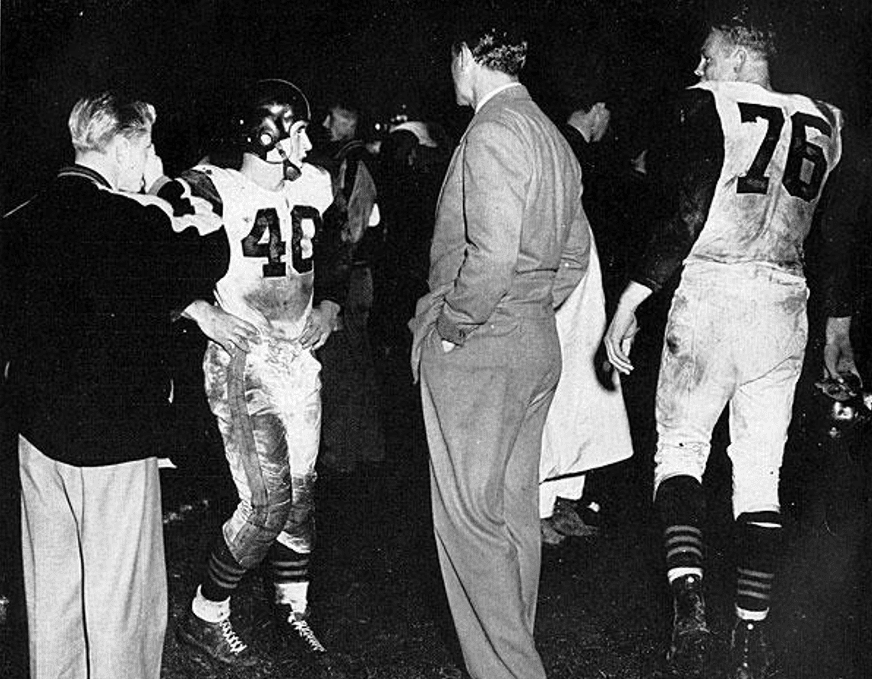
In 1955, the Stampeders welcomed a new coach, Jack Hennemeier. However, success on the field was again elusive, with the Stampeders losing even to the BC Lions rookie team. The following year, the players again failed to make the playoffs, giving rise to the hiring of Otis Douglas as coach.
After finishing third in 1957, the Stampeders were defeated in the Western Division semifinals by the Winnipeg Blue Bombers. General manager Jim Finks introduced several improvements in the 1960s to enhance the team’s performance, but before that, the team had to go through the 1958 and 1959 seasons, missing the playoffs in both.
A new stadium and the advent of a legendary quarterback
The Stampeders played their first game at the new McMahon Stadium, which became the team’s new home, in August 1960. Despite a loss to the Winnipeg Blue Bombers, the Calgarians redeemed themselves by defeating the Saskatchewan Roughriders a couple of weeks later.
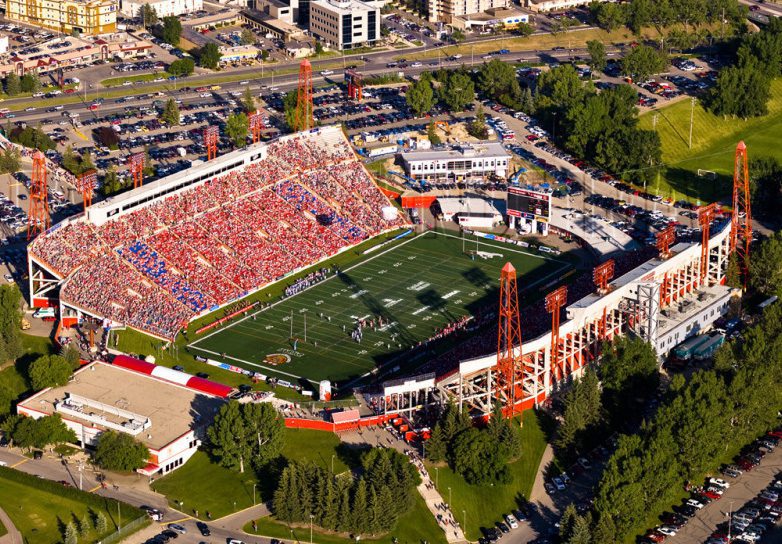
McMahon Stadium
In 1960, the Stampeders finally made it to the postseason, although they lost to the Edmonton Eskimos in the Western Division semifinals. After this setback, Otis Douglas was sacked as coach and replaced by Steve Owen. It took Owen until the end of the season before he handed the job over to Bobby Dobbs.
The team reached the playoffs again in 1961 but fell short in the West Division finals. The signing of Wayne Harris, one of the best quarterbacks in CFL history, was a significant development. Harris helped lead the Calgarians to their finest season since 1949.
New Records
The team finished second in the 1963 and 1964 seasons but fell in the West Division postseason. Regarding notable accomplishments, Lovell Coleman became the first player on the team to be named CFL Most Outstanding Player. Bobby Dobbs stepped down as coach in 1964, while his former assistant Rogers Leahy was appointed as general manager. Subsequently, Jerry Williams took over Dobbs’ role as head coach.
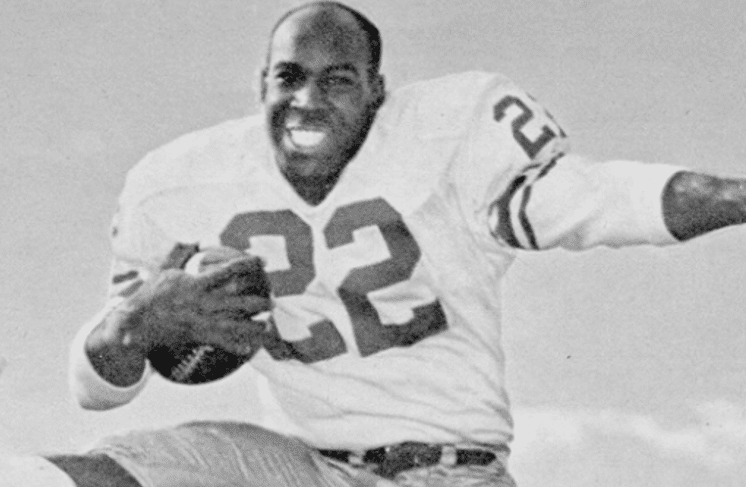
Lovell Coleman
In 1966, Canadian football legend Lovell Coleman was injured, so the Stampeders finished the season only fourth. At the same time, new quarterback Peter Liske set the record for throwing receivers the ball for 2,177 yards. The player improved on his accomplishments in 1967, setting a new league record with 40 touchdown passes. Jerry Williams was named CFL Coach of the Year, although the team did lose to the Saskatchewan Roughriders in the finals.
The following year, the Stampeders won their first Grey Cup since 1948 before falling to the Ottawa Raph Riders. In 1969, Jim Duncan took over as head coach.
Fast rise and long fall
The Stampeders started the 1970s with a loss to the Montreal Alouettes, but a year later, the team won the Grey Cup. In 1970, the Stampeders brought in Calgary’s John Forzani, who led them to beat the Toronto Argonauts and win the Grey Cup in a soaked Vancouver stadium.
The 1972 signified the start of the team’s 20-year downfall. The team finished sixth in 1974 and did not make it into the playoffs. Back then, Jim Wood was the head coach, but he was replaced by Bob Baker before the 1975 season. The team failed to make the playoffs yet again, even though football player Willie Burden was named the CFL’s Most Outstanding Player after breaking the CFL record for the 1,700-meter run.
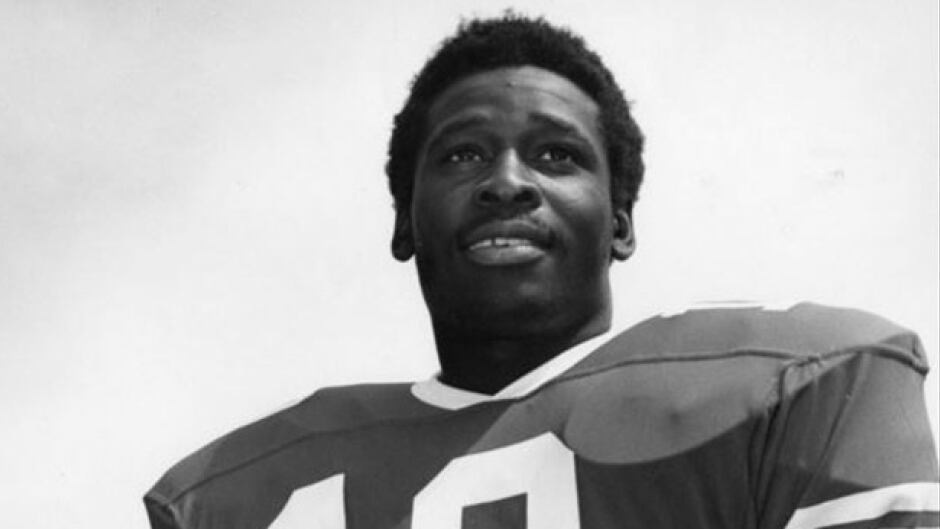
Willie Burden
In 1976, the team set a record for the worst performance in its history, leading to the replacement of their coach, Bob Baker, with Joe Tiller. Jack Gotta came on as coach the following year, though the Stampeders missed the playoffs for the sixth year in a row. Under Gotta’s leadership, the team succeeded in making the playoffs in 1978 and 1979.
Another change of coaches and the threat of bankruptcy
The team began the 1980s with a promising record but stumbled in the Western Division semifinals. The Calgarians regained credibility in 1982 but suffered another defeat in the semifinals, forcing Jack Gotta to relinquish some of his duties as general manager and concentrate on coaching. Soon after, the Stampeders board invited Walter Prisco to become the team manager. Among his responsibilities were accounting, marketing and public relations.
Things didn’t get any better when Steve Buratto took over the team, with the Stampeders finishing in last place in 1984. The job didn’t go well during Bud Riley’s coaching tenure either. He stepped down as coach in 1985 when the team finished in last place.
Back then, the Stampeders could not gather even 15 thousand fans to their home games, putting them in danger of going bankrupt. Nonetheless, thanks to a prosperous marketing strategy, the Save Our Stamps campaign, the team sold more than 22 thousand season tickets, providing them with a financial buffer for several years.
In 1986, the team returned to the field. At that time, Bob Vespaziani was the head coach. The record holder that year went to the player Rick Johnson for the highest number of passes thrown and honors received. The sluggish start in 1987 forced Vespaziani to step down and be replaced by Lary Kuharich. With the last one, the players were finally able to get things going, winning eight of ten games before they lost in the semifinals to the Edmonton Eskimos.
Norman Kwong took over as president of the team in 1988, after which the team’s rapid prosperity began. Kuharich departed coaching the following year after the team lost the semifinals of the Western Division. Wally Buono took his position.
Change of owners and quarterbacks
In October 1991, the Calgary Stampeders were acquired by Calgary entrepreneur Larry Ryckman. Later that year, the team faced the Winnipeg Blue Bombers in the Grey Cup final. During that time, the Calgary players showed excellent results and brought the championship to their team.
The Stampeders won the West Division championship in 1993 but fell in the final to the Edmonton Eskimos, keeping them out of the Grey Cup, which was then held in Calgary. The following year, the Stampeders scored the most points in CFL history for the regular season, with 698. However, they lost to the BC Lions in the West Division final. Despite successes in the regular season, the team continued to suffer defeats in crucial games for no apparent reason.
In 1995, the Stampeders reached the finals again in the regular season but lost in the Gray Cup. Subsequently, team owner Larry Ryckman sold the Stampeders to Sig Gutsche. In February 1996, Stan Schwartz, a future member of the CFL Hall of Fame, was elected president of the team.
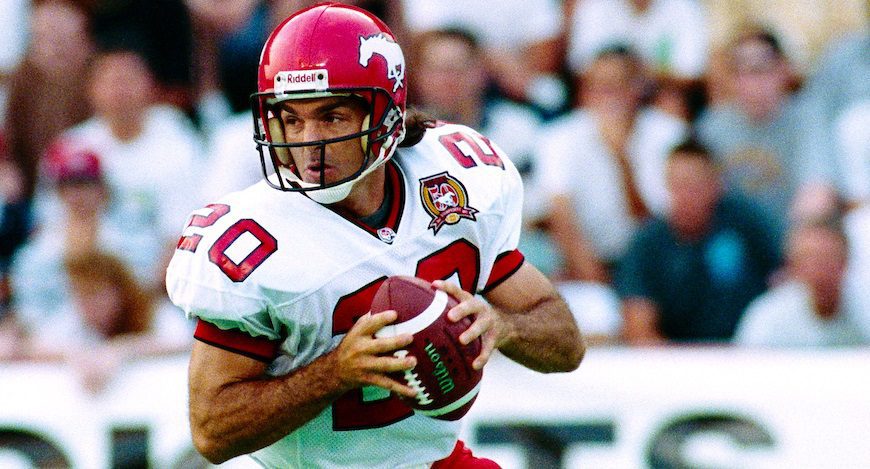
Doug Flutie
In 1996, quarterback Jeff Garcia led the team to the first place finish but injured his knee badly during the game, so the Stampeders lost to the Edmonton Eskimos in the West Division final. Garcia was subsequently nominated for the league’s Most Outstanding Player award in second place for his performance. During the 1998 season, Garcia’s wins were aided by quarterback Dave Dickenson.
In the 1998 Grey Cup final, the Stampeders defeated the Hamilton Tiger-Cats thanks to Mark McLoughlin’s last-second goal. Garcia left the team after the 1998 season, allowing Dave Dickenson to replace him. The following year, the team finished second in the regular season, which qualified them for the Grey Cup rematch. After receiving moderate success in the 1990s and making it to the playoffs each year, expectations for the 2000s among football fans were extremely high.
The team lived up to the fans’ hopes. In 2000, the Stampeders won the West Division championship, with Dave Dickenson being named the CFL’s Most Outstanding Player. During the offseason, Dickenson left the Stampeders to try his hand at the San Diego Chargers. At the same time, team leader Allen Pitts was fired.
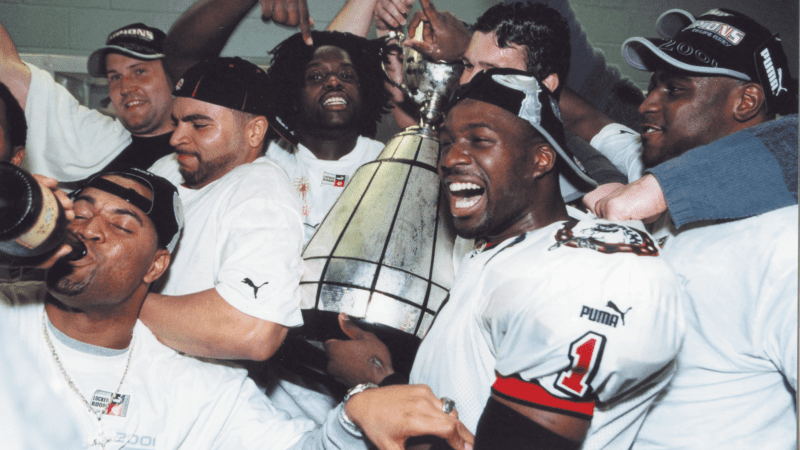
In 2001, thanks to defenseman Marcus Crandell, the team made it into the playoffs. Thanks to his high-class play, the team defeated the Winnipeg Blue Bombers and won their fifth Grey Cup.
Disagreements within the team
After California businessman Michael Feterik bought out the Stampeders in 2001, the team faced three tumultuous years. The businessman insisted that his son Kevin Feterik be drafted in the quarterback lineup. Later on, a contentious figure, Fred Fateri, took over as chief operating officer. In January 2003, Jim Barker came on board as head coach.
Things got worse when the Stampeders finished last in the Western Division in 2003. Later in September, Fateri resigned from the team and ex-player Mark McLoughlin became the new president, sparking controversy among the players. Due to the team’s dissatisfaction, McLoughlin served as president for only 56 days, handing the post to Ron Rooke. Rooke appointed Matt Dunigan as general manager and head coach. However, such organizational changes did not yield positive results, so after the 2004 season, the Stampeders board razed its reputation to the ground.
Restoring a reputation
In 2005, a group led by Ted Hellard, John Forzani and Doug Mitchell bought out the Calgary Stampeders from Michael Feterik for about six million dollars. A few days after the change of owners, general manager and coach Dunigan, as well as president Rooke, were released. Jim Barker was appointed as the general manager, while Tom Higgins took on the roles of head coach and vice president of football operations. Ted Hellard, one of the owners, became president of the team. Following such drastic changes, the Stampeders secured second place in the West Division. However, they lost in the semifinals against the Edmonton Eskimos.
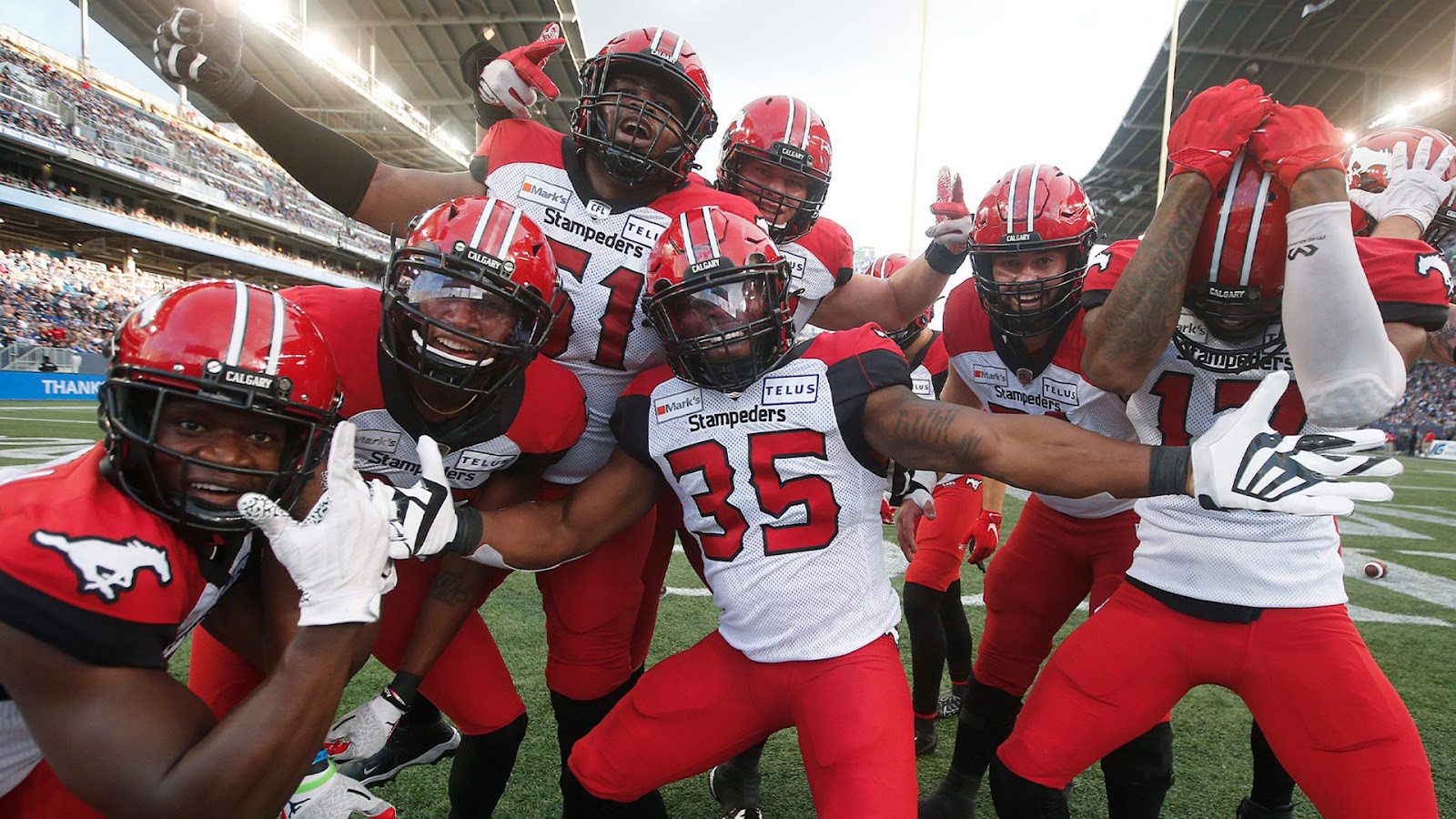
In early 2007, head coach Tom Higgins felt pressure from the team’s board and following a loss to the Saskatchewan Roughriders in the West Division semifinals, Higgins stepped down. His replacement was John Hufnagel.
Improvements rapidly followed the change of coach, with player Joffrey Reynolds having a terrific performance and player Burris receiving the Most Outstanding Player award. The Stampeders won their sixth Gray Cup by defeating the Montreal Alouettes. In 2014, Bo Levi Mitchell was the quarterback who helped the Stampeders win the Grey Cup for the seventh time. Bo Levi Mitchell is known for his extraordinary skills as a quarterback, which have gained him multiple awards.

Bo Levi Mitchell
Since their advent in 1945, the Stampeders have tremendously impacted the Canadian Football League (CFL).