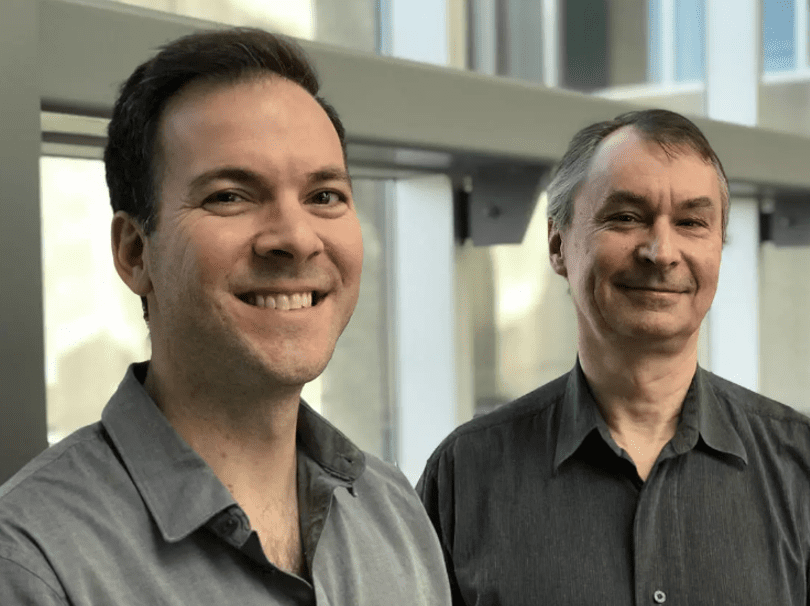

“I’ve always wondered: what if multiple sclerosis starts in the brain, and immune attacks are a consequence of its damage?” – These are the words of Andrew Caprariello, a neurobiologist and co-creator of an unconventional theory about multiple sclerosis (MS). In 2018, he developed this theory alongside Peter Stys, a neurologist, professor in the Department of Clinical Neurosciences at the Cumming School of Medicine, University of Calgary, and a member of the Hotchkiss Brain Institute. Read on for details as reported by icalgary.
What Is Multiple Sclerosis?
The first description of multiple sclerosis was provided in 1868 by French neurologist Jean-Martin Charcot. Multiple sclerosis is a chronic condition of the central nervous system, where the body’s immune cells attack the myelin sheath surrounding nerve fibers. This sheath plays a critical role in the functioning of the brain and spinal cord.
An autoimmune attack on the myelin sheath results in various neurological disorders, affecting multiple parts of the nervous system and leading to symptoms such as physical, cognitive, and even psychological issues.
Patients may experience a range of neurological symptoms, including:
- Visual impairments: double vision and other visual problems.
- Motor and sensory issues: muscle weakness, spasms, coordination difficulties, loss of sensation.
- Speech and swallowing challenges.
- Bladder and bowel dysfunction.
Cognitive symptoms often include slowed information processing, memory issues, depression, or unstable moods. Disease progression can lead to walking difficulties and other disabilities.
The exact causes of MS remain unknown, but genetic and environmental factors (e.g., viral infections) are believed to play a role. In 2020, approximately 2.8 million people worldwide were affected by MS, with women being twice as likely to develop the condition as men. It typically begins between the ages of 20 and 50.
The Scientists’ Theory
The prevailing view is that rogue immune cells enter the brain and cause myelin damage. However, alternative perspectives exist.
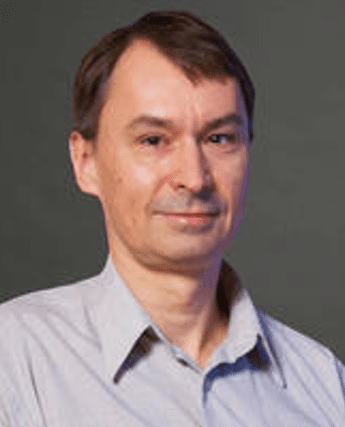
Peter Stys explained that during medical school, he was taught that immune attacks initiate the disease. However, his findings with Caprariello suggest a deeper, earlier process damaging the myelin, which then triggers immune responses.
Experiments That Challenged Conventional Beliefs
To test their theory, the researchers conducted experiments on mice. The results revealed that destabilizing enzymes in the brain trigger inflammatory lesions similar to those observed in MS. This suggests that brain-resident factors, not immune system malfunctions, may initiate the disease. The immune attack appears to be a natural response to these brain changes, rather than the root cause. While this doesn’t prove human MS follows the same mechanism, it opens new possibilities.

The researchers then explored treatments targeting myelin damage to see if they could halt immune responses. Collaborating with scientists at the University of Toronto, they found that such treatments stopped immune attacks and prevented brain inflammation. This further supported their theory that immune attacks result from, rather than cause, brain damage.
This paradigm shift underscores the importance of targeting nervous system processes rather than the immune system. Anti-inflammatory drugs remain effective but are less beneficial in late progressive stages when disability arises.
Funding the Research
Securing funding for unconventional theories can be challenging. This research received support from the Brain and Mental Health Strategic Research Fund, established at the University of Calgary. The fund aims to back innovative, high-risk projects, providing opportunities for teams lacking traditional funding sources.
Caprariello and Stys’s research was one of four interdisciplinary projects awarded funding. Their work highlights the potential of Calgary’s brain and mental health researchers and reinforces the University of Calgary’s position as a global leader in this field.
The Cumming School of Medicine and Hotchkiss Brain Institute
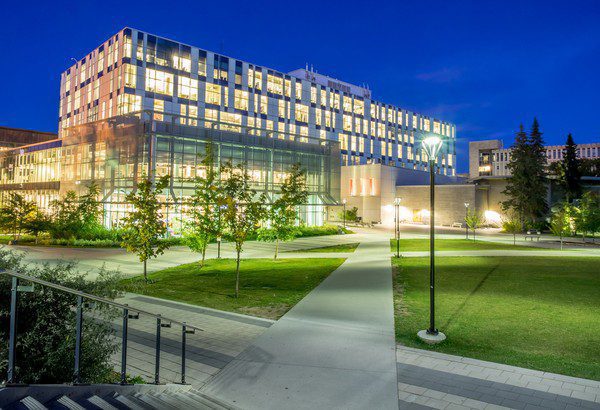
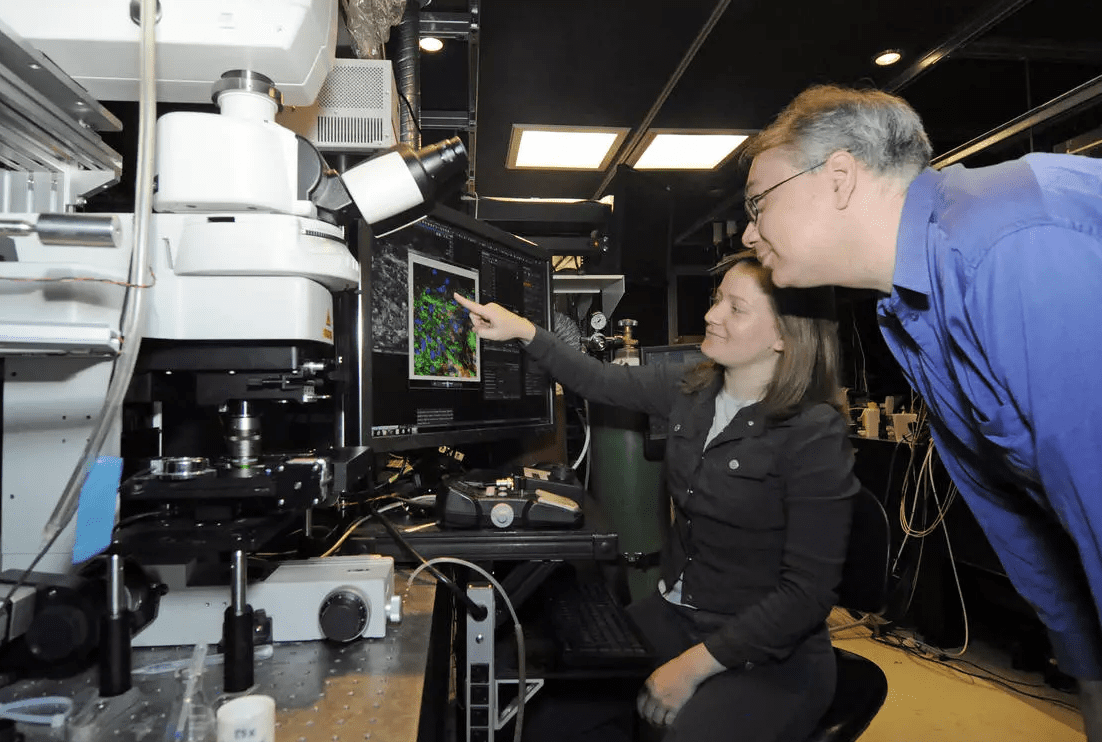
The research took place in Peter Stys’s lab at the Hotchkiss Brain Institute within the Cumming School of Medicine. The lab features specialized microscopes used to study MS, Alzheimer’s, and other neurodegenerative diseases. Interestingly, white lab coats are banned in this lab—only dark clothing is permitted to avoid light reflection, which could interfere with experiments.
About Andrew Caprariello and Peter Stys
A strategic neurobiologist, Andrew has experience setting up preclinical laboratories from scratch. He studied neuroinflammation and spectroscopy imaging at the University of Calgary and holds a PhD in Cellular and Molecular Physiology from Case Western Reserve University, USA.
Peter Stys is a neurologist and world leader in studying pathophysiological mechanisms of white matter damage in stroke and trauma. A graduate of the University of Ottawa and the University of Toronto in neurology, he completed postdoctoral research at Yale University, focusing on nerve fiber damage in the brain and spinal cord.
In 1992, Stys returned to Canada to establish his own research lab and began his clinical neurology practice at Ottawa Hospital. In 2007, he joined the Hotchkiss Brain Institute.
His team developed imaging techniques for live myelinated axons and glial cells and identified novel mechanisms responsible for axo-glial damage during ischemia. These findings laid the groundwork for therapeutic interventions in acute stroke, spinal cord injury, traumatic brain injury, and neuroinflammatory conditions.
Peter Stys is a recipient of the Alberta Heritage Foundation for Medical Research Award and serves as an adjunct professor at Carleton University and the University of Ottawa. He has published numerous peer-reviewed articles and several books.