

In 2020, two students from the Faculty of Science at the University of Calgary, Russell Shanahan and Steven Lemmer, achieved a celestial breakthrough. Their cosmic-scale discovery provided an unprecedented view of the magnetic structure of the Milky Way galaxy and the process of star formation. More on icalgary.
A 5-Year Research Journey
The students worked with data from the international THOR Project—a comprehensive study of interstellar gas in the Milky Way. Assisting them was radio astronomer and associate professor Jeroen Stil, who had over 30 years of experience in radio astronomy and 15 years in survey work at the time. The research spanned five years, with Russell focusing on data processing, image creation, and technical analysis.
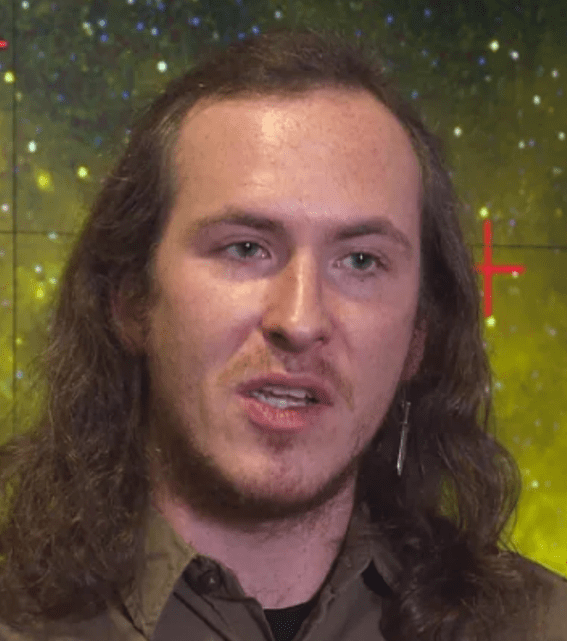
While analyzing one part of the Milky Way, the researchers detected something unexpected in a distant spiral arm—18,000 light-years from Earth. As Russell Shanahan told Global News, the initial reaction was skepticism; they thought it might be an error.
The team analyzed three-dimensional images: the X and Y planes of the image and a third plane representing frequencies. These frequencies revealed waves of magnetic fields interacting with plasma. In one corner of the galaxy, they detected frequency signatures that went off the charts.
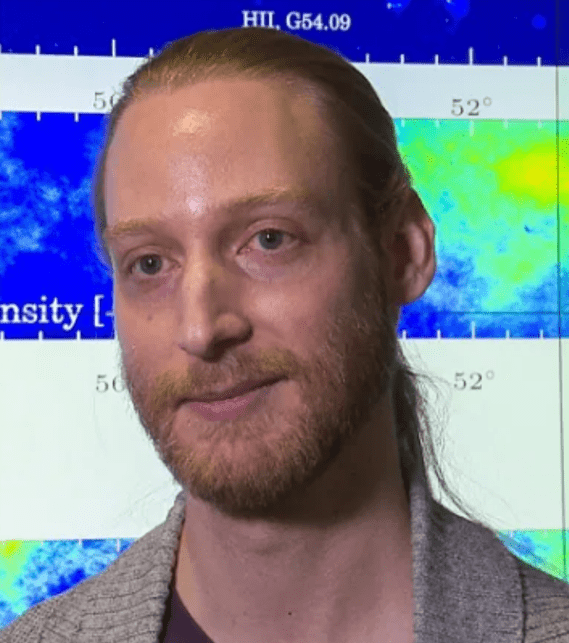
The discovered structure is a combination of the galaxy’s magnetic field and the plasma within it. The field observed in the galaxy’s arm represented a surge of data that no one had anticipated.
Role of Advanced Technology
This breakthrough was made possible by advancements in technology. Scientists had been searching for this region of the galaxy since the 1980s but couldn’t find it because radio telescopes lacked the capability to detect such a strong effect. The THOR Project had access to the Very Large Array—a system of 28 radio telescopes.
The magnetic field provided a clearer picture of the galaxy’s composition and insights into star formation. Until then, the process of star formation remained unclear. The discovery suggests that magnetic fields play a more significant role in star formation than previously thought. Compression of gas and strengthening magnetic fields may be the initial processes leading to the collapse of molecular gas and dust, eventually resulting in star formation.
International Impact
The discovery was published in the Astrophysical Journal, garnering international attention and prompting additional studies. Shanahan and Stil traveled to Germany to present their findings to the global scientific community. When they unveiled their results in Berlin, the reaction was shock—no one had anticipated such a discovery.
The finding spurred numerous follow-up actions. An international team proposed dedicated observation time on telescopes. Meanwhile, several other students began investigating the implications of the discovery for future research.
About the Milky Way
The Milky Way (also known as the Galaxy, the Way of God, or the Milky Path) is the galaxy that contains the Solar System. It also refers to the stars visible to the naked eye, recognized as a faint, luminous band across the celestial sphere.
The first to suggest that the Milky Way consists of distant stars was the ancient Greek philosopher Democritus. In the 18th century, British astronomer William Herschel attempted to determine the galaxy’s dimensions. He found that the star system was finite in size and formed a thick disk. Its true size was determined in the 20th century: the main disk of the Milky Way spans approximately 100,000–120,000 light-years in diameter and 250,000–300,000 light-years in circumference. Alongside stars, the Milky Way contains gas and dust clouds that obscure light from distant stars.