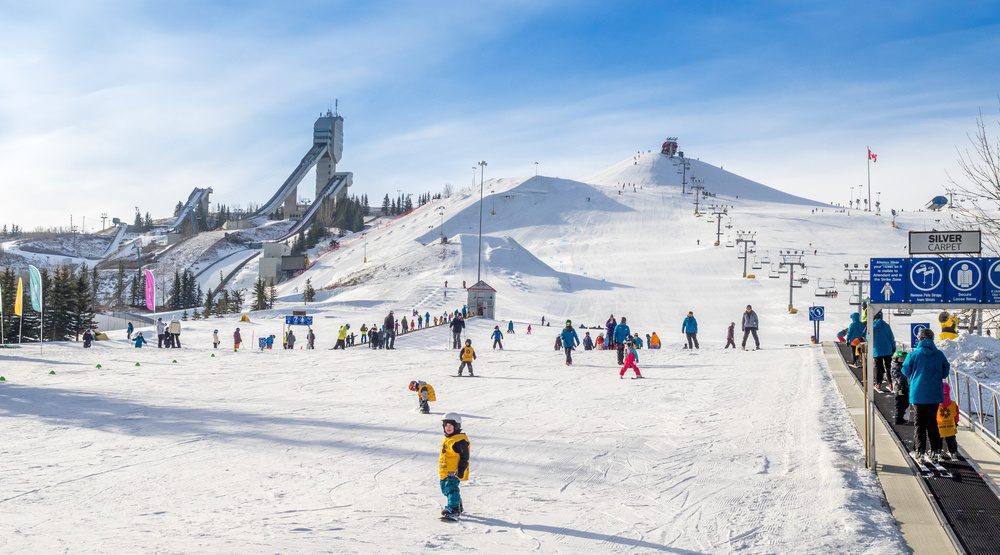

Canada Olympic Park (once known as Paskapoo Ski Hill) is a ski hill and multi-use sports complex in west Calgary. It is used for training and competition of athletes as well as for leisure purposes. Next on icalgary, here are six intriguing facts about the Canada Olympic Park.
1. The 1988 Winter Olympics were held here
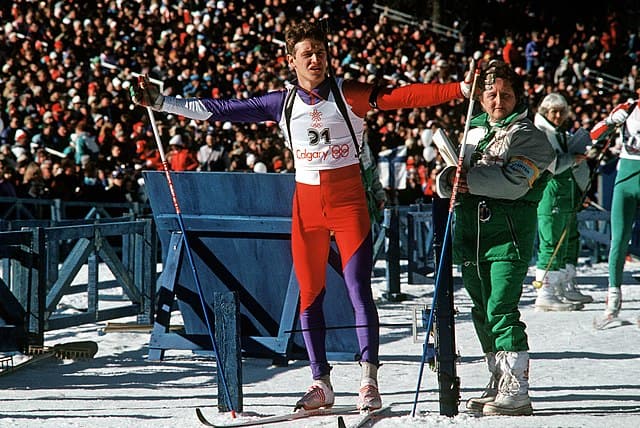
The hill was developed for its own use in 1960 by Paskapoo, the University of Alberta ski team. During preparations for the 1988 Winter Olympics, the hill was transformed into Canada Olympic Park.
It hosted ski jumping, bobsledding, luge, Nordic combined and freestyle competitions. The Games in Calgary were among the most expensive ever hosted at that time. They cost the city 829 million Canadian dollars.
2. The park is suitable for both winter and summer sports
Canada Olympic Park serves as a training arena for athletes across the country. It is the main reason why it is constantly expanding. The WinSport organization, the owner and manager of the park, is committed to ensuring that its park fully provides the necessary training facilities for its athletes, avoiding the need for partnership with other training facilities.
However, it’s not just professional athletes who can get here. If you enjoy snowboarding, skiing, mountain biking, bobsledding, or sledding, here is the place to be. The park offers programs and facilities to help people of all ages discover, develop and excel in sports. It’s an excellent place for developing human potential through the spirit of sport.
With the onset of cold temperatures and icy conditions, Calgarians are taking advantage of the opportunity for winter fun in the park. These are primarily alpine skiing, snowboarding, cross-country skiing, ski jumping, bobsledding and luge.
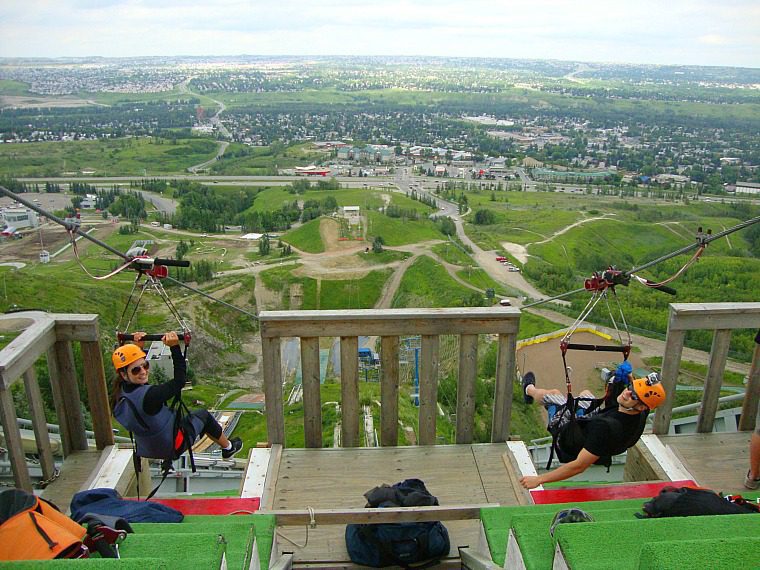
When the temperature column starts climbing and the day grows longer, the park is used for mountain biking, ziplining and summer festivals and camps. There is also a mini golf course.
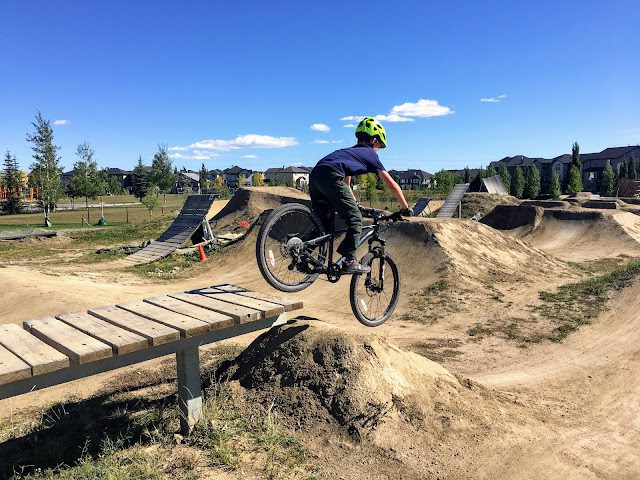
The dirt jump park for mountain biking features three-level lines: for beginners, intermediate and advanced. The first line is for practicing and predicting the speeds required for intermediate and advanced levels. The intermediate line is used for practicing jumps, lifting in the air and maintaining your balance in the air. The advanced line is designed to perform tricks after you have mastered the basics of riding the previous lines. There are also trails with various obstacles on the west side of the hill. The eastern part contains the minimum amount of means for performing tricks. A high-speed chairlift with bike racks is available for cyclists.
The ski jumping facility features six ski jumps ranging in size from K4 to K95, available throughout the year. The K4 and K89 ski jumps are only used during the summer season. K95 is never used, although it is the largest one. It exists as a party place. Interestingly, the Altius Nordic Ski Club practices on the jumps here.
In addition, there are indoor facilities that operate throughout the year. These include indoor ice arenas and fitness centers.
3. It’s home to the Canada’s Sports Hall of Fame
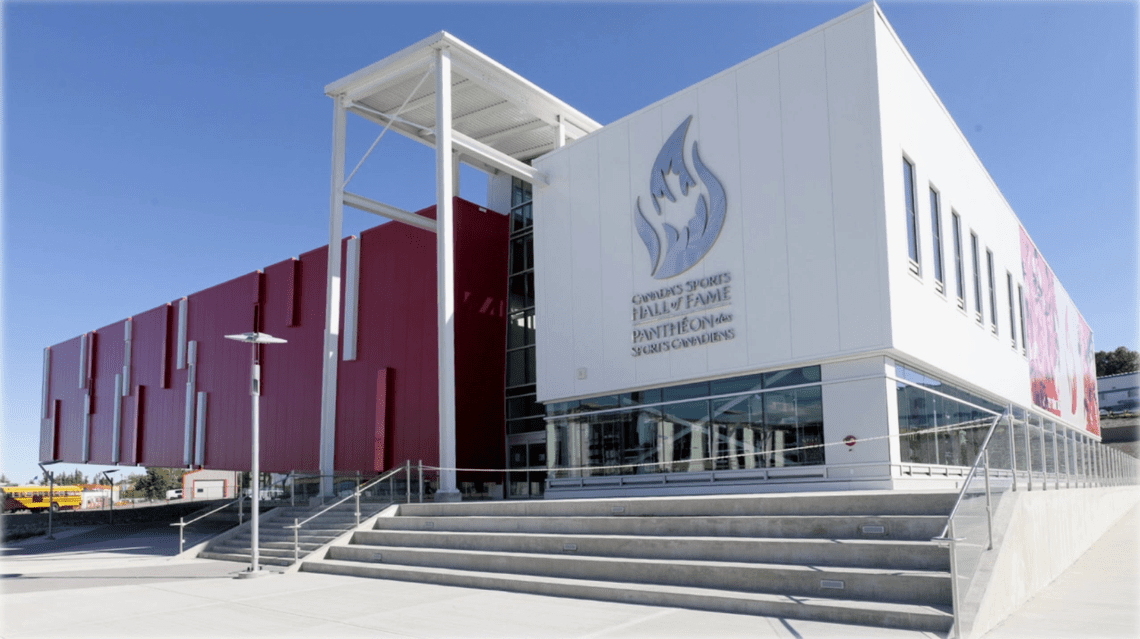
The Canada’s Sports Hall of Fame is dedicated to the history of Canadian sport, serving as a museum about outstanding Canadian athletes and all involved in the development of sport.
The Hall was first located at the Stanley Barracks in Toronto (from 1955 to 1957). It was established at the initiative of Harry Price, the chairman of the Sports Committee for the Canadian National Exhibition. The Hall was moved to the Printing Building in 1957 to share its quarters with the Hockey Hall of Fame.
In 1961, Canada’s Sports Hall of Fame and the Hockey Hall of Fame were moved to a new building. In 1993, the Hockey Hall of Fame took up its residence separately in Brookfield Place in downtown Toronto. Following that, Canada’s Sports Hall of Fame lost its popularity among visitors, so the idea of moving it to the capital city arose. However, the federal government scrapped the idea in 1999.
As a result, the Hall closed its doors to the public in 2006. In 2008, the Hall’s Board of Governors announced a national bid for a new permanent location for the museum. Among the nine cities that applied, Calgary took the win.
The former Calgary Olympic Development Association (CODA) has donated its land for that purpose. The facility opened its doors on July 1, 2011. The project has cost 50 million Canadian dollars, of which about 30 million was spent on the construction of the space and another 20 million on operating costs.
In 2019, the Hall of Fame instituted the People’s Choice Award to recognize athletes who embrace local charities and community betterment.
4. The park makes use of artificial snow.
The park utilizes artificial snow to create terrain suitable for skiing. A complex of snowmaking equipment is located on the ski hills. Among the equipment used are McKinney manual snow guns and SMI PoleCat automatic snowmakers.
Snow generators, AKA snow guns, atomize water into fine droplets, which then freeze and turn into snow. Then, the frozen water is sprayed by special nozzles into the free air space, where the temperature must be below zero. Such equipment allows for a slightly longer ski season and better skiing conditions.
According to many skiers, artificial snow is even better because natural snow sometimes has a density unsuitable for skiing. Snowmakers, in their turn, create snow with optimum density for winter sports.
5. Accidents have occurred
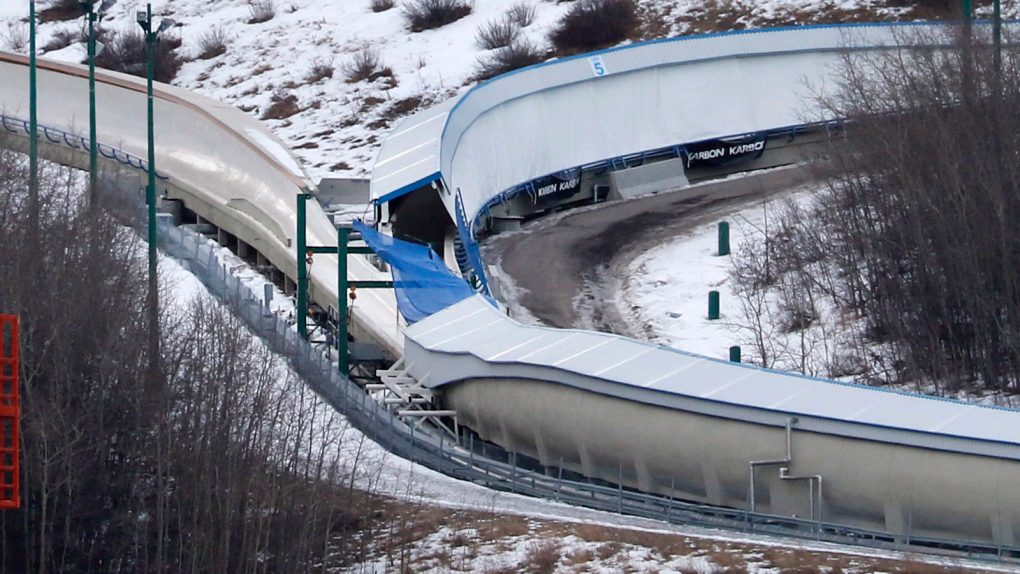
Entrance to the park without a ticket is prohibited. Any spontaneous and rash actions without staff supervision can lead to tragic consequences.
On February 6, 2016, a group of eight teens broke into the park’s track without permission and started sledding on the bobsled track. The teens crashed into a large gate used to separate the bobsled and luge tracks. Two twin brothers were killed and six others were severely injured.
6. The park houses the Markin MacPhail Center
The center bears the names of its donors, Allan Markin and Keith MacPhail. It was built in 2014. It’s a training center for winter sports. The center combines high-performance training with community recreation in an athlete-centered environment.
The facility includes three hockey fields, an international arena, practice fields, community fitness centers, administrative facilities, as well as conference and banquet halls. Professional coaches, medical physicians, physiotherapists and sports psychologists work with athletes. There is even a specific sports medicine clinic where they may be treated.
The Center also houses the National Sports School, as well as several national and provincial sports organizations such as Hockey Canada, Alpine Canada and WinSport Canada.
By the way, part of the land near the park’s base was to be turned into a sprawling shopping center. However, on June 11, 2012, City Hall councilors voted against the expansion plans. Instead, the park expanded the following year, but for sports purposes, at 4 million Canadian dollars. In 2018, the government allocated another 6.8 million dollars to renovate the park’s former Olympic sliding track.